Showing posts with label lance wallach expect witness. Show all posts
Showing posts with label lance wallach expect witness. Show all posts

Amazon.com: IRS Secrets You Should Know eBook: Lance Wallach: Books
Lance Wallach
National Society of Accountants Speaker of the Year and member of the AICPA faculty of teaching professionals, Wallach is a frequent speaker on retirement plans, financial and estate planning, and abusive tax shelters.
He is also a featured writer and has been interviewed on television and financial talk shows including NBC, National Pubic Radio's All Things Considered and others,Lance authored Protecting Clients from Fraud, Incompetence and Scams published by John Wiley and Sons, Bisk education's CPA's Guide to Life Insurance and Federal Estate and Gift Taxation,
as well as AICPA best-selling books including
Avoiding Circular 230 Malpractice Trap.
National Society of Accountants Speaker of the Year and member of the AICPA faculty of teaching professionals, Wallach is a frequent speaker on retirement plans, financial and estate planning, and abusive tax shelters.
He is also a featured writer and has been interviewed on television and financial talk shows including NBC, National Pubic Radio's All Things Considered and others,Lance authored Protecting Clients from Fraud, Incompetence and Scams published by John Wiley and Sons, Bisk education's CPA's Guide to Life Insurance and Federal Estate and Gift Taxation,
as well as AICPA best-selling books including
Avoiding Circular 230 Malpractice Trap.
Testimonials...
"Mr. Wallach, thanks so much for taking the
time to talk to me ..today about VEBAs.
Any information you can send me would be
helpful. Hopefully, we can work together in
the future as interest in VEBAs increase."
time to talk to me ..today about VEBAs.
Any information you can send me would be
helpful. Hopefully, we can work together in
the future as interest in VEBAs increase."
Corman G. Franklin
Office of the Assistant Secretary for Policy
U.S. Department of Labor
Office of the Assistant Secretary for Policy
U.S. Department of Labor
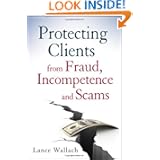
Protect your clients – and yourself – from all kinds of financial chicanery and stupidity with this vital new book
It doesn't matter if a financial error was made because of malice or ignorance – the end result is that you lose money. Luckily, you don't have to sit idly and take it. If you have Protecting Clients from Fraud, Incompetence and Scams, you can identify and avoid the dysfunctional sectors of the financial industry, steer clear of the fallout from the Madoff Era, and guide your clients to real, healthy, sustainable returns. This powerful book
- Pinpoints dysfunctional sectors within the financial industry and offers advice against frauds and scammers
- Shows how a team approach to asset management can ward off financial predators
- Offers practical strategies and tools to combat client risk for Risk and Asset Management
Offering insightful information to protect your clients from all sorts of frauds and incompetence, this essential guide equips you with tips and techniques to spot the red flags of fraud and prevent it before it starts.

IRS Secrets You Should Know
Including
Tax, Insurance, and Cost Reduction Strategies for Small Business
Just one of these ideas from the book will save you thousands:
IRS red flags and how to audit proof your tax return
Why your retirement plan is an audit target: how to upgrade it
The only way to deduct estate and business succession plan costs
Turn your life insurance into a tax deduction
Reduce health insurance, workers’ comp and other insurance costs
Discover the only deductible benefit plan where money comes out tax free, even before retirement
Protect assets from creditors while obtaining a tax deduction
Why the IRS has turned your accountant into a tax collector, and what to do about this
Seven best new tax reduction ideas
Use a captive insurance company to reduce taxes and costs
And much more!!!
Books can be purchased here
Amazon.com: Lance Wallach: Books, Biography, Blog, Audiobooks, Kindle
Lawyer for Audits
http://www.lawyer4audits.com/index.html
Defending and protecting businesses and financial professionals from IRS audits,
Insurance companies and Brokerage firms.
Defending and protecting businesses and financial professionals from IRS audits,
Insurance companies and Brokerage firms.
Insurance Agents: Help for those who sold 419 and 412i plans.
Insurance Agents: Help for those who sold 419 and 412i plans.
Our team of experienced consulting "tax attorneys", CPAs, and "insurance experts" specializing in 412i" and "419 "IRS
audits" that resulted from plans you sold to your clients, mainly "419 plans", "412i plans", "captive insurance" plans
and "Section 79" plans as well as other similar "employee benefit plans" or "welfare benefit plans" that the IRS is
targeting as "abusive tax shelters".
Our firm has been successful in "defending life insurance agents" and "material advisors" who have participated in
the sale of these "benefit plans".
Our team of experienced consulting "tax attorneys", CPAs, and "insurance experts" specializing in 412i" and "419 "IRS
audits" that resulted from plans you sold to your clients, mainly "419 plans", "412i plans", "captive insurance" plans
and "Section 79" plans as well as other similar "employee benefit plans" or "welfare benefit plans" that the IRS is
targeting as "abusive tax shelters".
Our firm has been successful in "defending life insurance agents" and "material advisors" who have participated in
the sale of these "benefit plans".
Instructions for Form 8918
www.irs.gov/pub/irs-pdf/i8918.pdf
The link will take you to Instructions for Form 8918, or in other words, a Material Advisor Disclosure Statement.
The link will take you to Instructions for Form 8918, or in other words, a Material Advisor Disclosure Statement.
Transfer Pricing
The IRS dedicates enormous resources toward dealing with taxpayer’s who are involved with any form of transfer pricing. The transfer pricing provisions of IRC 482 address four general types of transactions between commonly owned or controlled parties.
1- Use or transfer of tangible property
2- Services
3- Loans
4- Use or transfer of intangible property (especially cost sharing agreements)
Use of tangible property: When one member of a controlled group rents or leases property to another member of the group, the price paid for use of such property must equal an arm’s length amount. Per Treas. Reg. 1.482-2(c )(2)(i), the arm’s length amount is determined by reference to the amount that would have been charged between independent parties for use of the same or similar property under similar circumstances.
Dont Give the IRS Every Last Drop
By Lance Wallach
Have you seen the commercials where certain companies advertise that they can settle an IRS debt for “pennies on the dollar”? Usually the offer is too good to be true. Besides, you never want to have the problem in the first place.
The chances of an individual being audited have approximately doubled since 2000. So you need to be careful with your tax return.
IRS officials say research has shown that tax “noncompliance” typically is highest among people who work for themselves, who deal in large amounts of cash, who don’t have taxes withheld from their pay and whose income isn’t reported separately to the IRS, such as by their employer.
Dont Give the IRS Every Last Drop
The Irrevocable Trust Cash Release Program - HG.org
The Irrevocable Trust Cash Release Program
Through a special program, created by Money Watch Consultants Inc., called The Irrevocable Trust Cash Release Program, funds from the insured’s irrevocable trust can be released and made available to pay for long term care, in a facility or at home. And this care can even be provided by a family member.
The amounts of funds that can be made available are typically a vast multiple of the funds currently in the trust. Despite the leveraging, due to the unique structuring of the program, the funds in excess of the initial deposits, and prior to the death of the insured, are received by the trust, and paid out of the trust, on a tax free basis.
This program has recently attracted much attention because Congress has just extended estate tax exemptions to 5 million dollars for individuals and 10 million dollars for married couples. Thus many people who have set up and funded various irrevocable trusts in order to pay their estate taxes, feel that they are no longer needed.
This program gives them the ability to dramatically leverage these funds to pay for health care that they anticipate may eventually be required, without worrying about liquidating assets or making withdrawals on retirement accounts.
The latest development in irrevocable trust management can solve the insured’s desire to get, tax free cash out of the underused insurance policy when most needed, and prior to dying.
Through a special legal loophole, needed funds from the insured’s irrevocable trust can be released and made available to whoever you want, including yourself. Lance Wallach, who wrote the CPA's guide to trusts and estates, and other continuing education books read by CPA's attorneys and financial planners and associate William Kaufman have spent years studying the problem... Most life insurance trusts are underperforming, often requiring [Bill Kaufman] much greater premiums than anticipated. If they were properly designed, no more premiums would be due. Many policies in trusts are rapidly using up their insurance cash values, dramatically underperforming, and are at risk of failing altogether. There are many other problems with almost all of the trusts examined. If you advised your client on these matters, or serve as trustee for him/her, you may have a contingent liability suit on these matters, should the life insurance fail.
Now cash can be released to be used when really needed. Most attorneys, CPA’S, planners etc. that have heard me speak at thousands of national conventions don’t have a clue about the problems. Most of them even created some of these problems for their clients, who are also not aware. As an expert witness Lance Wallach has never lost a case. This does not necessate a lawsuit, just a simple fix. Make sure if you advisor tries it, he has successfully helped others with the program. If done wrong the IRS will come calling, Google Lance Wallach for articles on point. Despite the leveraging, due to the unique structuring of the program, the funds in excess of the initial deposits, and prior to the death of the insured, are received by the trust, and paid out of the trust, on a tax free basis.
If you have an insurance or similar trust you probably have lots of money in it. You may also have lots of problems that will not be discovered until you die. We have been consulted by many beneficiaries with these problems, usually after being charged thousands of dollars by their law firms to tell them about the problems, but not fix them. The way most of the trusts that we have studied, usually set up by law firms, are structured; the big beneficiaries at death will be the law firms. Worse, insurance in the trusts easily falls apart before death, unless you die young. Get an experienced person to review your trust, either to free up lots of money, or to review for problems before it is too late. [Bill Kaufman] If you don‘t [Bill Kaufman] believe me, than Google Lance Wallach and then Google your advisor and see who is more credible. You have worked hard for your money. Don‘t let poor planning, lawyers greed, insurance agents with big commissions disrupt what you thought was sound planning.
ABOUT THE AUTHOR: Lance Wallach, Bill Kaufman
Lance Wallach, National Society of Accountants Speaker of the Year and member of the AICPA faculty of teaching professionals, is a frequent speaker on retirement plans, abusive tax shelters, financial, international tax, and estate planning. He writes about 412(i), 419, Section79, FBAR, and captive insurance plans. He speaks at more than ten conventions annually, writes for over fifty publications, is quoted regularly in the press. He does expert witness testimony and has never lost a case.
Copyright Lance Wallach, CLU, CHFC
More information about Lance Wallach, CLU, CHFC
This program has recently attracted much attention because Congress has just extended estate tax exemptions to 5 million dollars for individuals and 10 million dollars for married couples. Thus many people who have set up and funded various irrevocable trusts in order to pay their estate taxes, feel that they are no longer needed.
This program gives them the ability to dramatically leverage these funds to pay for health care that they anticipate may eventually be required, without worrying about liquidating assets or making withdrawals on retirement accounts.
The latest development in irrevocable trust management can solve the insured’s desire to get, tax free cash out of the underused insurance policy when most needed, and prior to dying.
Through a special legal loophole, needed funds from the insured’s irrevocable trust can be released and made available to whoever you want, including yourself. Lance Wallach, who wrote the CPA's guide to trusts and estates, and other continuing education books read by CPA's attorneys and financial planners and associate William Kaufman have spent years studying the problem... Most life insurance trusts are underperforming, often requiring [Bill Kaufman] much greater premiums than anticipated. If they were properly designed, no more premiums would be due. Many policies in trusts are rapidly using up their insurance cash values, dramatically underperforming, and are at risk of failing altogether. There are many other problems with almost all of the trusts examined. If you advised your client on these matters, or serve as trustee for him/her, you may have a contingent liability suit on these matters, should the life insurance fail.
Now cash can be released to be used when really needed. Most attorneys, CPA’S, planners etc. that have heard me speak at thousands of national conventions don’t have a clue about the problems. Most of them even created some of these problems for their clients, who are also not aware. As an expert witness Lance Wallach has never lost a case. This does not necessate a lawsuit, just a simple fix. Make sure if you advisor tries it, he has successfully helped others with the program. If done wrong the IRS will come calling, Google Lance Wallach for articles on point. Despite the leveraging, due to the unique structuring of the program, the funds in excess of the initial deposits, and prior to the death of the insured, are received by the trust, and paid out of the trust, on a tax free basis.
If you have an insurance or similar trust you probably have lots of money in it. You may also have lots of problems that will not be discovered until you die. We have been consulted by many beneficiaries with these problems, usually after being charged thousands of dollars by their law firms to tell them about the problems, but not fix them. The way most of the trusts that we have studied, usually set up by law firms, are structured; the big beneficiaries at death will be the law firms. Worse, insurance in the trusts easily falls apart before death, unless you die young. Get an experienced person to review your trust, either to free up lots of money, or to review for problems before it is too late. [Bill Kaufman] If you don‘t [Bill Kaufman] believe me, than Google Lance Wallach and then Google your advisor and see who is more credible. You have worked hard for your money. Don‘t let poor planning, lawyers greed, insurance agents with big commissions disrupt what you thought was sound planning.
ABOUT THE AUTHOR: Lance Wallach, Bill Kaufman
Lance Wallach, National Society of Accountants Speaker of the Year and member of the AICPA faculty of teaching professionals, is a frequent speaker on retirement plans, abusive tax shelters, financial, international tax, and estate planning. He writes about 412(i), 419, Section79, FBAR, and captive insurance plans. He speaks at more than ten conventions annually, writes for over fifty publications, is quoted regularly in the press. He does expert witness testimony and has never lost a case.
Copyright Lance Wallach, CLU, CHFC
More information about Lance Wallach, CLU, CHFC
How to Beat the IRS
Go to this blog to find helpful advice, articles, and contacts that will assist you with all problems dealing with Life Insurance, section 79 problems, Captive Insurance Plans, and 419 Welfare Benefit Plan Audits. This blog also has in depth information about Offshore accounts and form 8886 listed transactions.
Click the link to go to the blog: How to Beat the IRS
Click the link to go to the blog: How to Beat the IRS
Fatca, Fbar, Offshore Amnesty Large Fines Coming - HG.org
Overseas banks are warning current and former U.S. clients that their names and information soon will be disclosed and that such disclosure will disallow the taxpayer’s entry into the IRSs amnesty program for undeclared offshore accounts.
Taxpayers allowed to enter the IRS amnesty program for confessors own taxes, interest and penalties usually amounting to up to half of the account balance, but they are protected from criminal prosecution.
More than 39,000 taxpayers have entered the amnesty program for undeclared offshore accounts.
Many U.S. taxpayers and advisers have been criminally charged in connection with offshore accounts.
More than 39,000 taxpayers have entered the amnesty program for undeclared offshore accounts.
Many U.S. taxpayers and advisers have been criminally charged in connection with offshore accounts.
Section 79 Scams and Captive Insurance History - HG.org
When trying to understand how a product becomes a target of government scrutiny it helps to know its history. In the case of plans that fall under Internal Revenue Code Section 79, that history is complex.
Insurance companies, agents, financial planners, and others have pushed abusive 419 and 412i plans for
years. They claimed business owners could obtain large tax deductions. Insurance companies, agents and others earned very large life insurance commissions in the process. Eventually, the IRS cracked down on the unsuspecting business owners. Not only did they lose the tax deductions, but they were also fined, in addition to being charged penalties and interest. A skilled CPA with extensive IRS experience could usually eliminate the penalties and reduce the fines. Most accountants, tax attorneys and others have been unsuccessful in accomplishing this.
After the business owner was assessed the fines and lost his tax deduction, he had another huge, unforeseen problem. The IRS then came back and fined him a huge amount of money for not telling on himself under IRC 6707A. If you participate in a listed or reportable transaction, you must alert the IRS or face a large fine. In essence, you must alert the IRS if you were in a transaction that has the possibility of tax avoidance or evasion. Not only must you file Form 8886 telling on yourself, but the form needs to be filed properly, and done every year that you are in the plan in any way at all, even if you are no longer making contributions.
years. They claimed business owners could obtain large tax deductions. Insurance companies, agents and others earned very large life insurance commissions in the process. Eventually, the IRS cracked down on the unsuspecting business owners. Not only did they lose the tax deductions, but they were also fined, in addition to being charged penalties and interest. A skilled CPA with extensive IRS experience could usually eliminate the penalties and reduce the fines. Most accountants, tax attorneys and others have been unsuccessful in accomplishing this.
After the business owner was assessed the fines and lost his tax deduction, he had another huge, unforeseen problem. The IRS then came back and fined him a huge amount of money for not telling on himself under IRC 6707A. If you participate in a listed or reportable transaction, you must alert the IRS or face a large fine. In essence, you must alert the IRS if you were in a transaction that has the possibility of tax avoidance or evasion. Not only must you file Form 8886 telling on yourself, but the form needs to be filed properly, and done every year that you are in the plan in any way at all, even if you are no longer making contributions.
Section 79 Plans: Section 79, Captive Insurance, IRS Audits and Lawsuits on 419 and 412i Plans
Section 79 Plans: Section 79, Captive Insurance, IRS Audits and Lawsuits on 419 and 412i Plans (click the link to go to the page)
While every effort has been made to ensure the accuracy of this publication, it is not intended to provide legal advice as individual situations will differ and should be discussed with an expert and/or lawyer. For specific technical or legal advice on the information provided and related topics, please contact the author.
Hg Experts
Legal Experts Directory
By Lance Wallach, CLU, CHFC Abusive Tax Shelter, Listed Transaction, Reportable Transaction Expert Witness
IRS Attacks Business Owners in 419, 412, Section 79 and Captive Insurance Plans Under Section 6707A - By Lance Wallach - Taxpayers who previously adopted 419, 412i, captive insurance or Section 79 plans are in big trouble. In recent years, the IRS has identified many of these arrangements as abusive devices to funnel tax deductible dollars to shareholders and classified these arrangements as listed transactions."
These plans were sold by insurance agents, financial planners, accountants and attorneys seeking large life insurance commissions. In general, taxpayers who engage in a “listed transaction” must report such transaction to the IRS on Form 8886 every year that they “participate” in the transaction, and you do not necessarily have to make a contribution or claim a tax deduction to participate. Section 6707A of the Code imposes severe penalties for failure to file Form 8886 with respect to a listed transaction. But you are also in trouble if you file incorrectly. I have received numerous phone calls from business owners who filed and still got fined. Not only do you have to file Form 8886, but it also has to be prepared correctly. I only know of two people in the U.S. who have filed these forms properly for clients. They tell me that was after hundreds of hours of research and over 50 phones calls to various IRS personnel. The filing instructions for Form 8886 presume a timely filling. Most people file late and follow the directions for currently preparing the forms. Then the IRS fines the business owner. The tax court does not have jurisdiction to abate or lower such penalties imposed by the IRS.
"Many taxpayers who are no longer taking current tax deductions for these plans continue to enjoy the benefit of previous tax deductions by continuing the deferral of income from contributions and deductions taken in prior years."
Many business owners adopted 412i, 419, captive insurance and Section 79 plans based upon representations provided by insurance professionals that the plans were legitimate plans and were not informed that they were engaging in a listed transaction. Upon audit, these taxpayers were shocked when the IRS asserted penalties under Section 6707A of the Code in the hundreds of thousands of dollars. Numerous complaints from these taxpayers caused Congress to impose a moratorium on assessment of Section 6707A penalties.
The moratorium on IRS fines expired on June 1, 2010. The IRS immediately started sending out notices proposing the imposition of Section 6707A penalties along with requests for lengthy extensions of the Statute of Limitations for the purpose of assessing tax. Many of these taxpayers stopped taking deductions for contributions to these plans years ago, and are confused and upset by the IRS’s inquiry, especially when the taxpayer had previously reached a monetary settlement with the IRS regarding its deductions. Logic and common sense dictate that a penalty should not apply if the taxpayer no longer benefits from the arrangement. Treas. Reg. Sec. 1.6011-4(c)(3)(i) provides that a taxpayer has participated in a listed transaction if the taxpayer’s tax return reflects tax consequences or a tax strategy described in the published guidance identifying the transaction as a listed transaction or a transaction that is the same or substantially similar to a listed transaction.
Clearly, the primary benefit in the participation of these plans is the large tax deduction generated by such participation. Many taxpayers who are no longer taking current tax deductions for these plans continue to enjoy the benefit of previous tax deductions by continuing the deferral of income from contributions and deductions taken in prior years. While the regulations do not expand on what constitutes “reflecting the tax consequences of the strategy,” it could be argued that continued benefit from a tax deferral for a previous tax deduction is within the contemplation of a “tax consequence” of the plan strategy. Also, many taxpayers who no longer make contributions or claim tax deductions continue to pay administrative fees. Sometimes, money is taken from the plan to pay premiums to keep life insurance policies in force. In these ways, it could be argued that these taxpayers are still “contributing,” and thus still must file Form 8886.
It is clear that the extent to which a taxpayer benefits from the transaction depends on the purpose of a particular transaction as described in the published guidance that caused such transaction to be a listed transaction. Revenue Ruling 2004-20, which classifies 419(e) transactions, appears to be concerned with the employer’s contribution/deduction amount rather than the continued deferral of the income in previous years. Another important issue is that the IRS has called CPAs material advisors if they signed tax returns containing the plan, and got paid a certain amount of money for tax advice on the plan. The fine is $100,000 for the CPA, or $200,000 if the CPA is incorporated. To avoid the fine, the CPA has to properly file Form 8918.
Lance Wallach, National Society of Accountants Speaker of the Year and member of the AICPA faculty of teaching professionals, is a frequent speaker on retirement plans, abusive tax shelters, financial, international tax, and estate planning. He writes about 412(i), 419, Section79, FBAR and captive insurance plans. He speaks at more than ten conventions annually, writes for more than 50 publications, is quoted regularly in the press and has been featured on television and radio financial talk shows including NBC, National Public Radio’s “All Things Considered” and others. Lance has written numerous books including “Protecting Clients from Fraud, Incompetence and Scams,” published by John Wiley and Sons, Bisk Education’s “CPA’s Guide to Life Insurance and Federal Estate and Gift Taxation,” as well as the AICPA best-selling books, including “Avoiding Circular 230 Malpractice Traps and Common Abusive Small Business Hot Spots.” He does expert witness testimony and has never lost a case. Contact him at 516.938.5007, wallachinc@gmail.com or visit www.taxadvisorexpert.com.
"Many taxpayers who are no longer taking current tax deductions for these plans continue to enjoy the benefit of previous tax deductions by continuing the deferral of income from contributions and deductions taken in prior years."
Many business owners adopted 412i, 419, captive insurance and Section 79 plans based upon representations provided by insurance professionals that the plans were legitimate plans and were not informed that they were engaging in a listed transaction. Upon audit, these taxpayers were shocked when the IRS asserted penalties under Section 6707A of the Code in the hundreds of thousands of dollars. Numerous complaints from these taxpayers caused Congress to impose a moratorium on assessment of Section 6707A penalties.
The moratorium on IRS fines expired on June 1, 2010. The IRS immediately started sending out notices proposing the imposition of Section 6707A penalties along with requests for lengthy extensions of the Statute of Limitations for the purpose of assessing tax. Many of these taxpayers stopped taking deductions for contributions to these plans years ago, and are confused and upset by the IRS’s inquiry, especially when the taxpayer had previously reached a monetary settlement with the IRS regarding its deductions. Logic and common sense dictate that a penalty should not apply if the taxpayer no longer benefits from the arrangement. Treas. Reg. Sec. 1.6011-4(c)(3)(i) provides that a taxpayer has participated in a listed transaction if the taxpayer’s tax return reflects tax consequences or a tax strategy described in the published guidance identifying the transaction as a listed transaction or a transaction that is the same or substantially similar to a listed transaction.
Clearly, the primary benefit in the participation of these plans is the large tax deduction generated by such participation. Many taxpayers who are no longer taking current tax deductions for these plans continue to enjoy the benefit of previous tax deductions by continuing the deferral of income from contributions and deductions taken in prior years. While the regulations do not expand on what constitutes “reflecting the tax consequences of the strategy,” it could be argued that continued benefit from a tax deferral for a previous tax deduction is within the contemplation of a “tax consequence” of the plan strategy. Also, many taxpayers who no longer make contributions or claim tax deductions continue to pay administrative fees. Sometimes, money is taken from the plan to pay premiums to keep life insurance policies in force. In these ways, it could be argued that these taxpayers are still “contributing,” and thus still must file Form 8886.
It is clear that the extent to which a taxpayer benefits from the transaction depends on the purpose of a particular transaction as described in the published guidance that caused such transaction to be a listed transaction. Revenue Ruling 2004-20, which classifies 419(e) transactions, appears to be concerned with the employer’s contribution/deduction amount rather than the continued deferral of the income in previous years. Another important issue is that the IRS has called CPAs material advisors if they signed tax returns containing the plan, and got paid a certain amount of money for tax advice on the plan. The fine is $100,000 for the CPA, or $200,000 if the CPA is incorporated. To avoid the fine, the CPA has to properly file Form 8918.
Lance Wallach, National Society of Accountants Speaker of the Year and member of the AICPA faculty of teaching professionals, is a frequent speaker on retirement plans, abusive tax shelters, financial, international tax, and estate planning. He writes about 412(i), 419, Section79, FBAR and captive insurance plans. He speaks at more than ten conventions annually, writes for more than 50 publications, is quoted regularly in the press and has been featured on television and radio financial talk shows including NBC, National Public Radio’s “All Things Considered” and others. Lance has written numerous books including “Protecting Clients from Fraud, Incompetence and Scams,” published by John Wiley and Sons, Bisk Education’s “CPA’s Guide to Life Insurance and Federal Estate and Gift Taxation,” as well as the AICPA best-selling books, including “Avoiding Circular 230 Malpractice Traps and Common Abusive Small Business Hot Spots.” He does expert witness testimony and has never lost a case. Contact him at 516.938.5007, wallachinc@gmail.com or visit www.taxadvisorexpert.com.
The information provided herein is not intended as legal, accounting, financial or any type of advice for any specific individual or other entity. You should contact an appropriate professional for any such advice.
While every effort has been made to ensure the accuracy of this publication, it is not intended to provide legal advice as individual situations will differ and should be discussed with an expert and/or lawyer. For specific technical or legal advice on the information provided and related topics, please contact the author.
FBAR Offshore Bank Accounts and Foreign Income Attacked by IRS
You may want to think about participation in the IRS' offshore tax amnestyprogram (called the Offshore Voluntary Disclosure Initiative). Do you want to play audit roulette with the IRS? Some clients think they are too small to be prosecuted. They are wrong.
To the average businessperson, only the guys with tens of millions secretly stashed in Swiss bank accounts get prosecuted. Don't tell that to Michael Schiavo. He was just prosecuted for hiding money in a Swiss account back in 2003. How much money does the IRS say he hid? A whopping $90,000. That's it.
But wait, there is more to the story. Schiavo attempted to do a quiet disclosure during the 2009 amnesty but instead of filling out the amnesty paperwork, he simply trusted that by coming forward voluntarily he could avoid criminal prosecution. He was wrong on all counts. Nothing is too small for the IRS, and nothing is too old.
Should you File, and then Opt Out?
There's been discussion of "opting out" of the program to take your chances in audit, but it's a topic fraught with danger. Now, however, there is guidance about opting out of the program that makes much of it transparent. Because of this late date it is recommended that you properly file FBARs and the 90-day request for amnesty extension. This is the first important step. If the forms are not done properly, you will have extensive problems and will not have to think about opting out. If your forms are properly done and filed, then your situation should be discussed with someone who is experienced in these matters.
Read the whole thing here
Read the whole thing here
Will Your Municipal Bond or Your Life Insurance Company Still Have Value Next Year?
Investor protection with municipal bonds is so spotty that there is potential for much mischief.
Disclosure, that bedrock of fair securities markets, is the heart of the problem facing municipal investors. Municipal issuers often don't file the most basic reports outlining their operating results or material changes in their financial conditions.
Even though hospitals, cities and states that borrow money are required by their bond covenants to make such filings, nondisclosure among the nearly 60,000 issuers is common.
To keep reading, click here
Disclosure, that bedrock of fair securities markets, is the heart of the problem facing municipal investors. Municipal issuers often don't file the most basic reports outlining their operating results or material changes in their financial conditions.
Even though hospitals, cities and states that borrow money are required by their bond covenants to make such filings, nondisclosure among the nearly 60,000 issuers is common.
To keep reading, click here
Blogger: Blogger Dashboard
For years, life insurance companies and agents have tried to find ways of making life insurance premiums paid by business owners tax deductible. This would allow them to sell policies at a "discount."
The problem became acute a few years ago with outlandish claims about how §§419A(f)(5) and (6) of the Internal Revenue Code (IRC) exempted employers from any tax deduction limitations. Other inaccurate assertions were made as well, until the Internal Revenue Service (IRS) finally put a stop to such egregious misrepresentations in 2002 by issuing regulations and naming such plans as "potentially abusive tax shelters" (or "listed transactions") that needed to be registered and disclosed to the IRS.This appeared to put an end to the scourge of scurrilous promoters, as many such plans disappeared from the landscape.
And what happened to the providers that were peddling §§419A(f)(5) and (6) life insurance plans a few years ago? We recently found the answer: Most of them found a new life as promoters of so-called "419(e)" welfare benefit plans.
READ THE REST HERE
Subscribe to:
Posts (Atom)